
What Is Emotional Architecture?
(And Why It Matters More Than Trends)
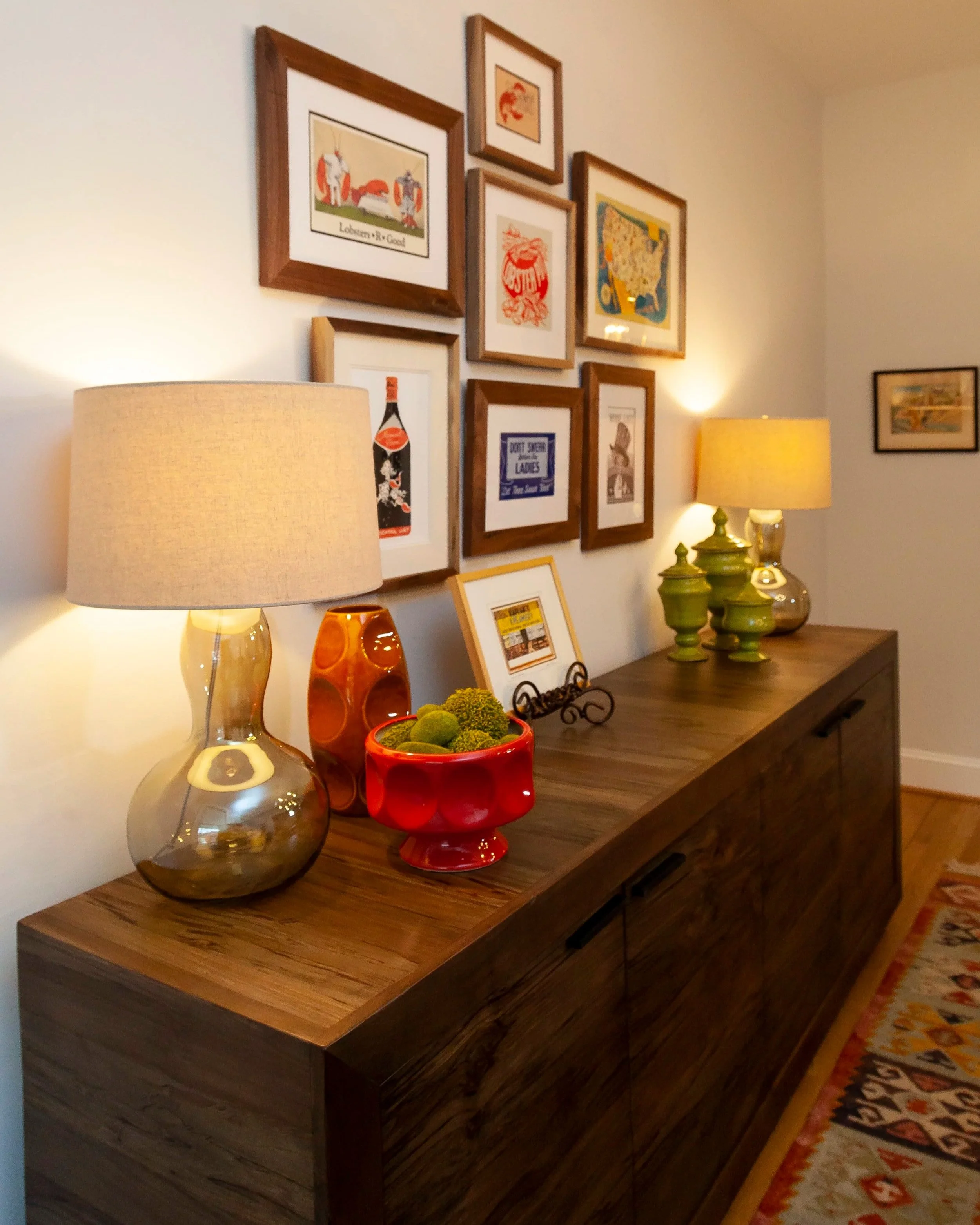
You know that feeling when you walk into a space and your whole body just… exhales? Your shoulders drop an inch. Your jaw unclenches. You haven't even sat down yet, and somehow you're already a little more you than you were thirty seconds ago. That's not an accident. That's not the candle, either (though, full credit to the candle).
That's emotional architecture.
So, what is it really?
Emotional architecture is the quiet magic that happens when good design stops trying to be impressive and starts trying to be true. It's the moment a room shifts from a curated little stage set into a place that actually holds your life — your morning coffee, your kid's homework explosion, your in-laws' Sunday lasagna, your loud-laughing book club, your worst Tuesday.
It's the difference between a house that looks like the cover of a magazine and a home that feels like a long exhale.
Pretty is easy. Pretty you can buy in twenty minutes with a credit card and a Pinterest board. Feeling is harder. Feeling is what happens when light, layout, color, texture, scale, and sound all quietly agree to work together on your behalf — like a really thoughtful dinner party where everyone gets along and you don't have to manage anyone.
Emotional architecture is design with intention behind every choice. Not "this rug is on trend." More like: "this rug means your toddler can flop down here for story time, your dog can nap in the sunny patch by the window, and the room finally feels grounded instead of floaty."
Why it matters more than trends
Trends are fun. I'm not anti-trend. (I will happily talk your ear off about the comeback of warm woods and curvy sofas and the slow death of the all-gray everything era.) But here's the truth: trends are about the moment. Emotional architecture is about your life. The trend cycle wants you to redo your kitchen every five years.
Emotional architecture wants your kitchen to still feel right ten years from now, when your toddler is taller than you and your "formal" dining room has somehow become a homework HQ, puzzle table, holiday-cookie command center.
When a space is designed for feeling it ages with grace; it absorbs your life instead of fighting it. You're not constantly thinking, "ugh, I need to redo this." You're thinking, "I cannot wait to get home." That's the real flex.
How emotional architecture actually shows up in a home
This is where it gets fun, because the answer is: in a hundred quiet little ways you'd never put on a mood board.
Light. Layered light, not overhead-fluorescent-interrogation light. A lamp that turns on at dusk and instantly makes the room feel like it's holding you.
Flow. The path you take from the front door to the place where you actually drop your bag, kick off your shoes, and finally breathe. If that path is awkward or cluttered, your house is making you tired and you don't even know it.
Scale. A sofa that fits your actual family — not just one perfectly-posed Instagram couple. Chairs you can curl up sideways in. A coffee table you can put your feet on without guilt.
Texture. A nubby throw, a worn-in leather chair, a wool rug that begs you to walk barefoot. Touch is half of how a room loves you back.
Color. Not just "what looks good" but what feels good — calm, warm, alive, grounded. Your color story should match the emotional story you want the room to tell.
Memory. The art from your grandmother. The shell your kid found at the beach in 2019. The bookshelf that holds the books you actually read, not the ones you bought for the spines. Emotional architecture takes those things seriously, because they're the whole point.
When all of these things line up, you get a home that doesn't just look like you — it works like you. Quietly. Behind the scenes. Like a really good friend who anticipates what you need before you ask.
The Dutch had a word for this (Um… it’s gezellig!)
It's Dutch, and it's almost impossible to translate cleanly into English, but the closest version is something like: cozy, warm, convivial, deeply at ease, in good company, exactly where you want to be. AND I TALK ABOUT IT ALL OF THE TIME! It's the feeling of a candlelit kitchen on a rainy night, your best friend on the couch, an open bottle of wine, no plans, nowhere to rush off to.
That feeling is the whole reason First District Designs exists. Gezellig is what emotional architecture is trying to build — a home that gives you that feeling on a Tuesday, not just on Christmas Eve.
You don't have to be Dutch to want it. (I'm certainly not, though my found dutch family would disagree.) You just have to want your home to feel like a place that loves you back.
"But my house is kind of a mess and I don't know my style"
First, same, girl, same. Second, that's not a problem, that's the starting point!
The thing about emotional architecture is that it doesn't require you to know what you want in terms of design. It requires you to know how you want to feel. Calm? Energized? Held? Inspired? Like you can finally invite your sister over without apologizing for the entryway?
Those are the answers I actually care about. The pretty stuff — the paint, the fabric, the lighting plan — it’s my job. The feeling is the base. Once we know the feeling, the rest is just thoughtful problem-solving (which, full disclosure, is the part I love most).
Your style will reveal itself. It almost always does. Most of my clients come in convinced they don't have a style, and three months later they're standing in their living room going, "Wait. This is me. How did I not know this was me?"
That moment, by the way, is my favorite part of the job.
The takeaway
Good design isn't really about furniture. It's about feeling.
A home built on emotional architecture doesn't chase the trend cycle, doesn't try to look like anyone else's house, and doesn't ask you to live up to it. It meets you where you are. It works hard behind the scenes so you don't have to. It holds your people, your routines, your messy beautiful real life.
And on a random Tuesday in February, when you walk through the door after a long day and your shoulders drop that one full inch — that's the design doing exactly what it was always meant to do.
That's the magic. That's the whole thing. That's why we do this.
Curious what emotional architecture might look like in your home? The blog is full of more behind-the-scenes stories, and you can always find me in your inbox if you sign up for the newsletter.